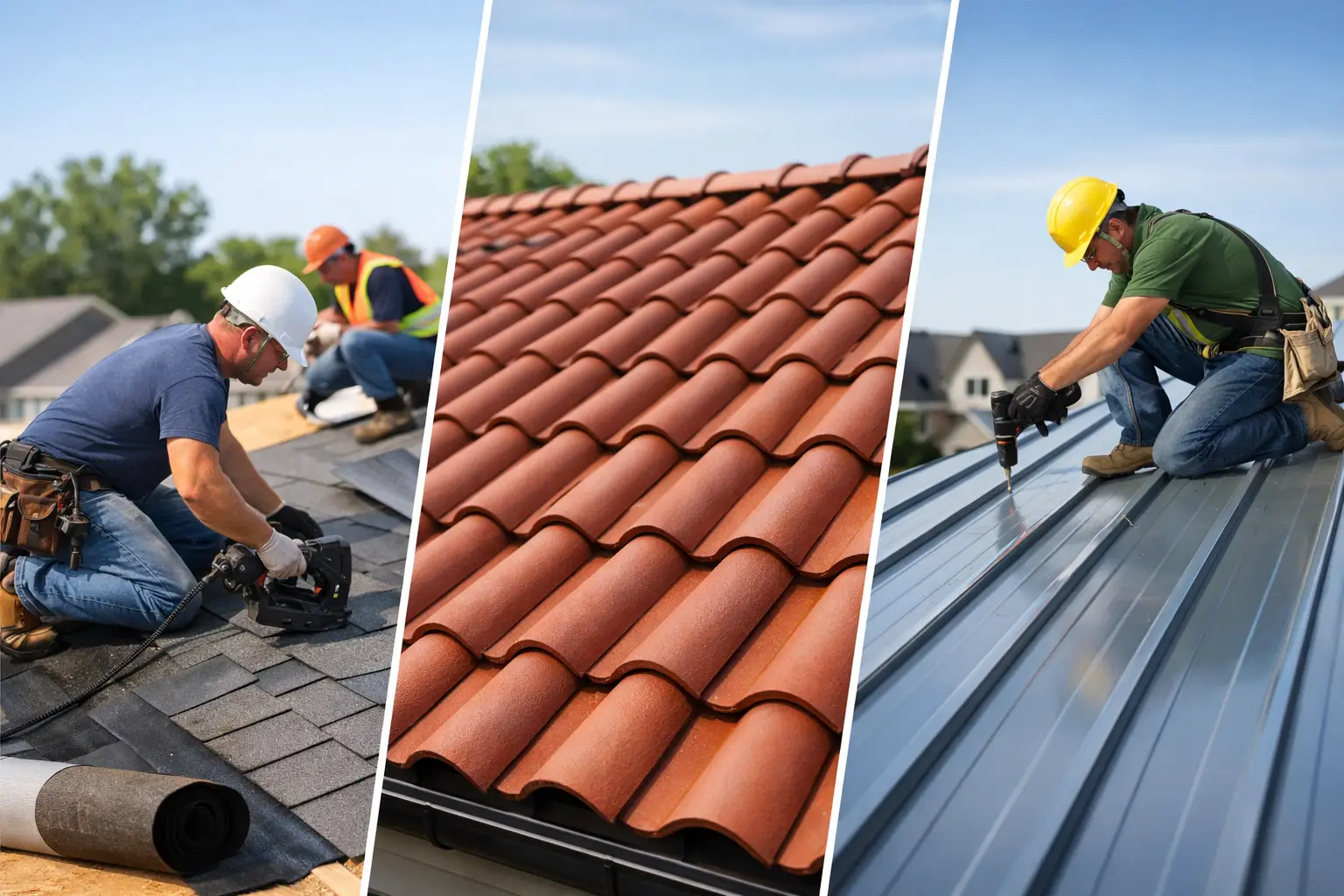
A new roof is not the place for guesswork. The right choice can protect your property for decades, improve energy performance, and prevent the kind of recurring leaks that lead to bigger repair bills later. When people ask about the types of roof installation, what they usually want to know is simpler – which roof is right for their building, budget, and long-term plans.
That answer depends on the structure of the property, the roof pitch, planning considerations, and how much ongoing maintenance you are prepared to deal with. In London and the surrounding area, it also depends on age and style. A Victorian terrace, a 1930s semi, a warehouse unit, and a modern extension all call for different roofing systems.
The main types of roof installation
At a broad level, most installations fall into two categories – pitched roofs and flat roofs. Within those, there are several material and construction options, each with strengths and trade-offs.
Pitched roof installation is common on houses, especially across traditional residential streets. Flat roof installation is often used on extensions, garages, dormers, commercial buildings, and some modern homes. Neither is automatically better. The best option is the one that suits the structure and performs well in real conditions over time.
Pitched roof installation
A pitched roof has a visible slope that helps rainwater run off into the guttering system. This style is popular because it is durable, practical in the UK climate, and often well suited to loft space and insulation upgrades.
For many homeowners, tiled roof installation is the most familiar option. Concrete tiles are widely used because they are cost-effective, long-lasting, and available in styles that suit both older and newer properties. Clay tiles tend to cost more, but they are valued for their appearance and lifespan, especially on period homes where the finish matters as much as performance.
Slate roof installation is another pitched option and is often chosen for its appearance, longevity, and traditional character. Natural slate can last for many decades when fitted properly, but it is heavier and usually more expensive than many alternatives. That means the roof structure needs to be suitable, and the installation has to be carried out with care. For listed buildings or homes in conservation-sensitive areas, slate may be the most appropriate choice.
Some pitched roofs use metal systems. These are less common on standard London housing than tile or slate, but they are used on certain extensions, commercial buildings, and architect-led residential projects. Metal roofing can be lightweight and low maintenance, but the look is not for everyone, and detailing matters if you want a clean finish and reliable weatherproofing.
Flat roof installation
Flat roofs are widely used, although most are not truly flat. They have a slight fall to allow water to drain away. If that drainage is poorly designed, problems can develop quickly, so the quality of the installation matters just as much as the membrane itself.
Felt roof installation has been a standard option for years, particularly on garages, porches, and extensions. Modern torch-on felt systems are more advanced than older felt roofs and can offer solid performance when installed correctly. They are often a practical choice where budget is a key factor.
EPDM rubber roof installation is popular for residential flat roofs because it is durable, weather-resistant, and well suited to simple roof shapes. It can perform very well over time, but it is not ideal for every detail or layout. Large penetrations, awkward corners, or heavily trafficked roof areas may call for another system.
GRP fibreglass roof installation is often selected where a neat, seamless finish is important. It works especially well on smaller flat roofs and can provide a clean appearance with good durability. However, GRP installation is sensitive to weather conditions during fitting, so timing and preparation matter.
Single-ply membrane systems are also used, particularly on commercial projects and larger flat roofs. These systems can cover wide areas efficiently and are often chosen for their consistency and performance. They require experienced fitting and proper specification, especially around insulation, upstands, and drainage points.
Choosing between the types of roof installation
The property itself usually makes the first decision for you. If the building was designed for a pitched roof, replacing it with a flat roof is rarely straightforward or advisable. Likewise, if you are roofing a rear extension, a flat system may be the most practical and cost-effective choice.
Budget matters, but it should not be the only factor. A cheaper installation can become expensive if it leads to early repairs, poor insulation, or repeated water ingress. It is often better to compare total value over the expected life of the roof rather than looking only at the initial quote.
Appearance also carries weight, especially for street-facing homes. A roof should suit the character of the property. On some houses, concrete tiles are a sensible modern replacement. On others, using slate or clay can help preserve the look and maintain value.
Then there is maintenance. Some systems require less ongoing attention than others, but no roof is maintenance-free. Gutters still need clearing, flashings still need checking, and storm damage can affect almost any covering.
Structure, insulation and ventilation
Roof installation is not only about the outer covering. The structure beneath it, along with insulation and ventilation, plays a major part in how well the roof performs.
If the timber structure is weak, damp-damaged, or poorly designed, even the best tiles or membranes will not fix the problem. A proper installation starts with assessing the deck, rafters, battens, and supporting components. In some cases, a full strip and replacement is the sensible route. In others, partial renewal may be enough.
Insulation standards have also changed over time. Many older roofs lose heat because insulation levels are poor or patchy. During a new installation, there is often a chance to improve thermal performance, reduce draughts, and bring the roof closer to current expectations.
Ventilation is another detail that gets overlooked until condensation appears. A roof has to deal with moisture as well as rain. If warm, damp air is trapped in the roof space, it can lead to mould, timber decay, and insulation problems. Good installation takes all of that into account from the start.
Why workmanship matters more than brochure claims
Different materials get most of the attention, but poor fitting causes a large share of roofing failures. You can install a quality system and still end up with leaks if the valleys, ridges, flashings, joins, or drainage outlets are not handled properly.
This is especially true around chimneys, parapet walls, skylights, and roof edges. These are the areas where water finds weaknesses first. A dependable installer will not rush the details, because that is where long-term performance is won or lost.
For landlords and commercial property managers, this point is even more important. A roofing issue does not just affect the roof. It can interrupt tenants, damage stock, affect compliance, and create repeat call-outs that eat into maintenance budgets.
Types of roof installation for homes and commercial buildings
Residential and commercial projects often need different approaches. On a house, appearance, kerb appeal, and compatibility with neighbouring properties may be priorities alongside weather protection. On a commercial building, access, drainage design, insulation performance, and service penetrations can carry more weight.
That is why a like-for-like replacement is not always the best answer. If an existing flat roof has failed repeatedly, the question is not only which material to replace it with. It is whether the falls are correct, whether the edges were detailed properly, and whether foot traffic or plant equipment has been damaging the surface.
A practical contractor will look at the whole roof system rather than selling a single material as the answer to everything. That straightforward approach is often what saves money in the long run.
What to ask before agreeing to installation
Before any work starts, ask what roof system is being recommended and why. You should also know whether the quote includes removal of the old roof, disposal of waste, structural repairs if needed, insulation upgrades, and replacement of related items such as fascias, soffits, or guttering.
It is also sensible to ask about expected lifespan, likely maintenance needs, and how the installation will be affected by weather or access. Clear answers matter. Roofing should not feel vague or pressured.
For London property owners, local experience helps. Roof shapes, access restrictions, neighbouring buildings, and older construction methods all affect how straightforward a job will be. A contractor used to working across these property types is more likely to spot issues before they become delays.
At Rooftech Roofing Contractors, that practical, no-shortcuts approach is what customers usually value most. The aim is not to oversell a roofing system. It is to fit the right one properly, using materials and methods that make sense for the building in front of you.
If you are weighing up the different types of roof installation, the smartest starting point is a clear assessment of the property itself. Once you know what the structure needs, the right roofing choice tends to become much easier.
Leave a Reply